Bhairon Singh Shekhawat - भैरों सिंह शेखावत
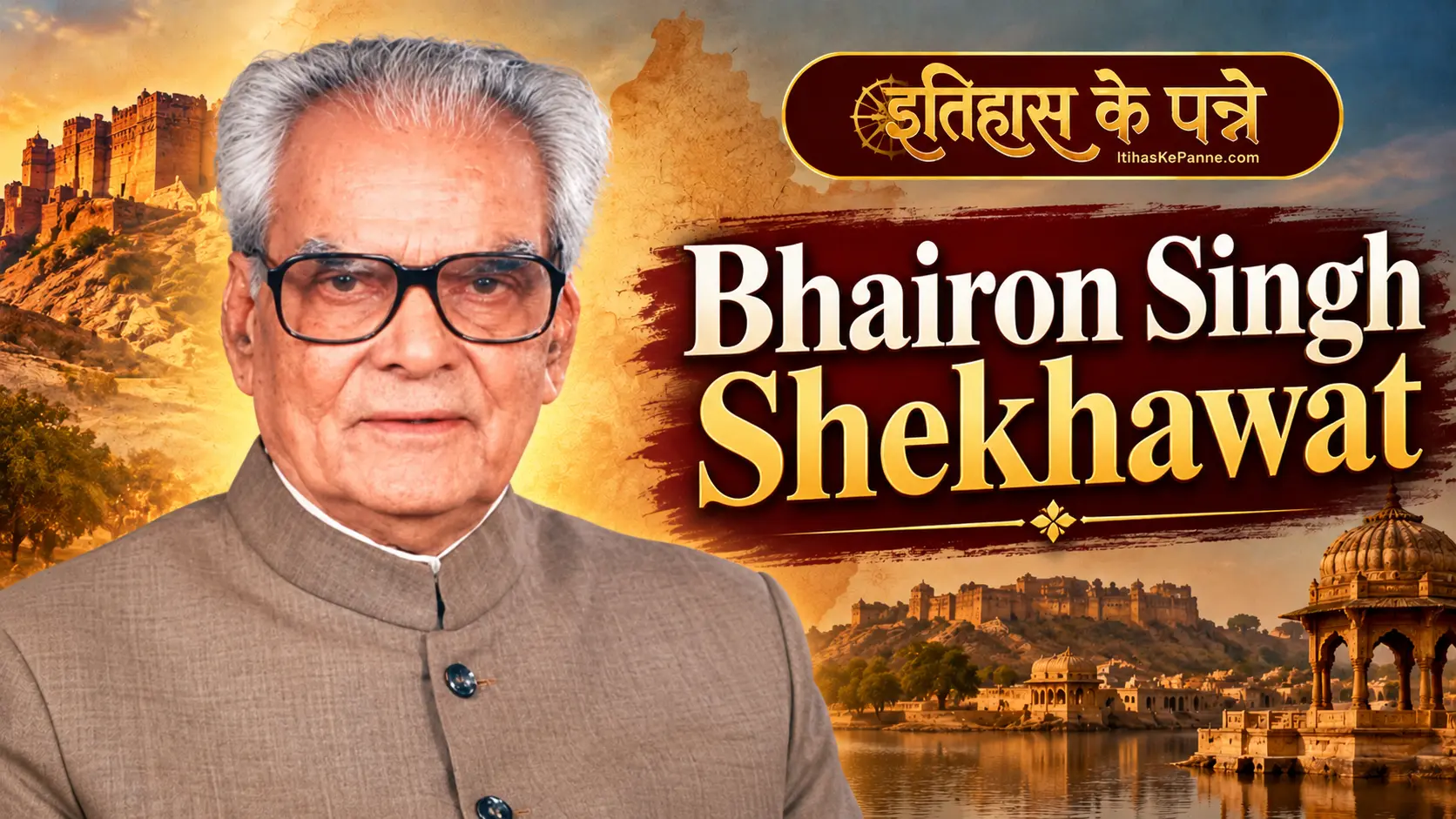
Bhairon Singh Shekhawat was an Indian politician and a stalwart leader who served as the 11th Vice President of India from 2002 to 2007. He was also a prominent leader of the Bharatiya Janata Party (BJP) and served as the Chief Minister of Rajasthan three times.
Early Life of Bhairon Singh Shekhawat
| Birth: | 23 October 1923 |
| Place of Birth: | Khachariyawas village, Sikar district, Rajasthan |
| Family: | Born into a simple farming family. |
| Father | Devi Singh Shekhawat, was a farmer. |
| Chief Minister of Rajasthan: | 3 terms |
| Vice President of India: | 2002–2007 |
| Chairman of the Rajya Sabha: | 2002–2007 |
| 2007 Presidential Election: | Lost to Pratibha Patil |
| Age at death: | 86 years |
| Political Parties: | Bharatiya Jana Sangh → Janata Party → BJP |
Bhairon Singh Shekhawat's Entry into Politics
Shekhawat had to cut his formal education short due to financial constraints. Before entering politics, he worked as a farmer and a police constable. After India's independence, Shekhawat entered public life and joined the Bharatiya Jana Sangh, the political party that preceded the BJP.
He was elected to the Rajasthan Legislative Assembly for the first time in 1952 and became one of the state's early opposition leaders. Over the next few decades, he established himself as an effective legislator, political strategist, and administrator.
Bhairon Singh Shekhawat served as the Chief Minister of Rajasthan three times.
| Term | Period |
| First | 1977–1980 |
| Second | 1990–1992 |
| Third | 1993–1998 |
His first government was formed in 1977 following the Janata Party's victory in Rajasthan. His political career was remarkable, as he remained an influential figure in Rajasthan politics for decades and successfully garnered support beyond his traditional political base.
Key Contribution
One of Shekhawat's well-known initiatives was 'Antyodaya', a program launched with the aim of identifying and assisting the poorest families in rural areas.
Her government also emphasized the following:
- Rural development
- Employment generation
- Welfare of economically weaker sections
- Promotion of tourism
- Infrastructure development
- Administrative reforms
Later, the 'Antyodaya' program emerged as a distinct and effective example of poverty alleviation.
Bhairon Singh Shekhawat as Vice President of India
❀ In 2002, Shekhawat was elected Vice President of India after defeating the opposition candidate, Najma Heptulla.
He held this office from August 19, 2002, to July 21, 2007.
❀ As Vice President, he was also the ex-officio Chairman of the Rajya Sabha. He was known as an experienced and strong-willed presiding officer.
❀ In 2007, Shekhawat contested the presidential election as an independent candidate with the support of the BJP-led NDA.
❀ He was defeated by Pratibha Patil, who became India's first female President. Following the election, Shekhawat resigned from the office of Vice President.
Political Style and Image
In some political circles, Shekhawat was known as "Bhairon Baba."
He was known for these qualities:
- Pragmatic political thinking
- The art of oratory and debate
- Administrative experience
- Ability to negotiate across different political parties
- Deep connection with rural Rajasthan
- A long parliamentary career
Although he was deeply associated with the BJP, leaders from various opposition parties also respected him.